Why Your Outreach Gets Ignored (And What Actually Gets Replies)
Most cold DMs look the same. Stand out with context, relevance, and a low‑friction ask—and use a copilot to do it fast across social networks.
You send a bunch of DMs. Maybe one person answers—maybe not.
It’s rarely your offer. It’s rarely your price.
It’s that your message looks like everyone else’s.
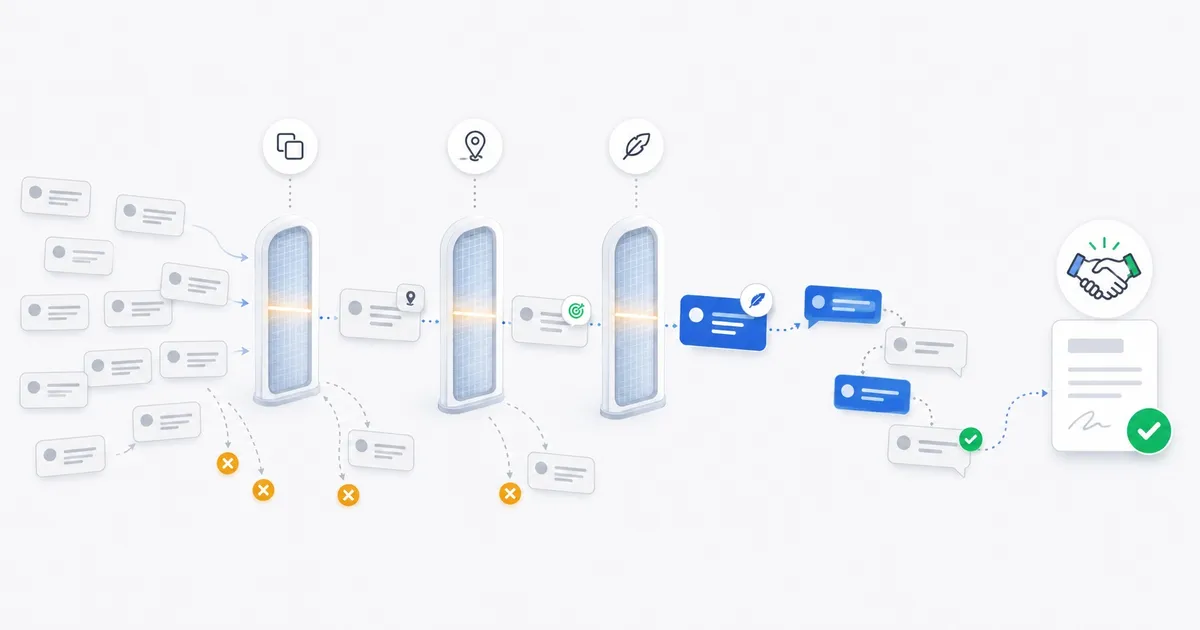
What gets replies: context + relevance + low friction.
TL;DR
- Context: show you paid attention to something specific they shared or did.
- Relevance: connect that to something genuinely useful you can share.
- Low friction: ask permission to send a tiny, helpful resource—no calls, no pressure.
- Doing this well by hand is slow. A copilot helps you find the hook and draft a natural DM, so you keep quality without burning time.
Why DMs get ignored
- No context
- A message that could be sent to anyone gets treated like everything else: ignored. Without a “why you/why now,” it blends into the inbox.
- Pitch first, conversation later
- Leading with a pitch or “jump on a call?” is too much, too soon. They haven’t even agreed there’s a problem.
- Obviously templated
- If the only personalized part is a first name, people spot it instantly—and scroll past.
The simple structure that gets replies
Part 1: Lead with context
- Mention something specific they posted, launched, asked, or showed interest in. One clear reference is enough to prove you’re not blasting.
Part 2: Make it relevant
- Briefly connect that context to something you’ve seen work in a similar situation. Keep it human and useful—no feature lists.
Part 3: Low‑friction ask
- Don’t ask for time. Ask permission to share a small, helpful thing: a checklist, a short explanation, a mini template, a quick screen recording. They can check it on their own schedule.
Copy‑and‑use DM snippets
- “Saw your note about [specific challenge]. I wrote up a simple way that helped in that situation. Want me to send the short version?”
- “Congrats on [recent thing]. Right after that, many people run into [common snag]. I have a tiny checklist that prevents it—ok if I share?”
- “Noticed your thread on [topic]. I’ve got a small template that makes this easier. Want me to drop it here?”
Gentle follow‑ups (later, if no answer)
- “Quick bump—happy to send that short resource if useful.”
- “No rush. If it helps, I can share the checklist any time.”
The hard part: doing this without spending your whole morning
The approach above works—but collecting context, deciding what to mention, and writing a natural DM takes time. Doing it person by person, every day, is why many people stop after a while.
What changes when you have a copilot
You still choose who to message and you approve every DM. The copilot just takes care of the heavy lifting across social networks:
- Reads recent activity
- Skims posts and profile info to surface a real, specific hook.
- Suggests what to mention
- Points to the most relevant moment or theme to reference.
- Drafts in your voice
- Builds a short DM using the context → relevance → permission flow, matching your tone.
- Keeps everything in one place
- Saves your conversations and sets a gentle reminder to follow up later—so nothing gets lost.
Same quality. Far less effort.
A simple daily rhythm you can keep
- Open a profile or post you want to reply to.
- Let the copilot surface a specific hook and a short DM in your tone.
- Skim, tweak if needed, and send.
- If there’s no response after a while, send one polite, value‑first nudge.
You’re not turning into a salesperson. You’re just sending better, kinder messages—faster.
Where FirstSell fits
FirstSell is a copilot for social DMs:
- Works inside your social networks.
- Finds a real hook from recent activity.
- Drafts a short, natural DM in your voice.
- Helps you share small, helpful resources without pressure.
- Keeps your chats organized so you can pick up the thread later.